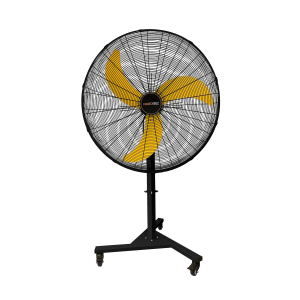
Agricultural &
Livestock.
Industrial-grade HVLS airflow engineered for farms, poultry houses, swine barns, and cattle sheds — lowering heat stress, controlling ammonia, and protecting yield year-round.
for livestock in pens
concentration at floor level
on all agricultural models
agricultural series fans
Heat Stress Costs More
Than You Think.
In enclosed livestock and poultry facilities, heat and humidity build rapidly — triggering heat stress that suppresses feed intake, reduces growth rates, cuts egg production, and raises mortality. Poor airflow compounds the problem, allowing ammonia and pathogens to concentrate at animal level.
Traditional tunnel ventilation and spot fans are loud, energy-intensive, and create uneven airflow across large barn footprints — leaving warm dead zones and stressing animals in corners and along walls.
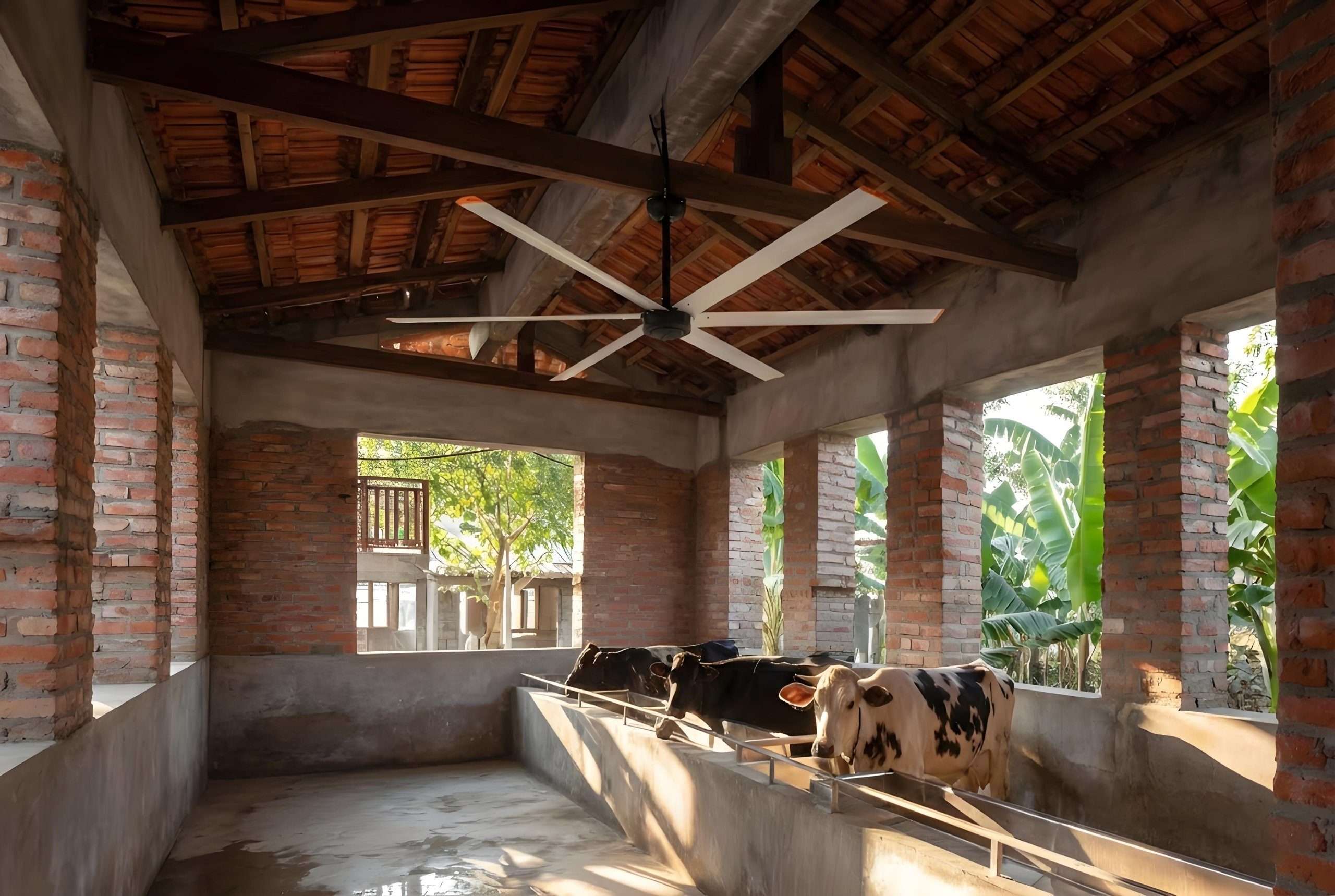

Cooler Animals.
Better Output.
The Marckeez Agricultural HVLS fan generates a wide, slow-moving column of air that reaches every corner of a large barn floor — eliminating hot spots, reducing heat load on animals, and creating a perceived temperature drop of up to 8°C without drafts or velocity stress.
Studies consistently show that cattle and swine kept in thermally comfortable environments achieve higher daily weight gains, improved feed conversion ratios, and reduced disease incidence — directly improving profitability per production cycle.
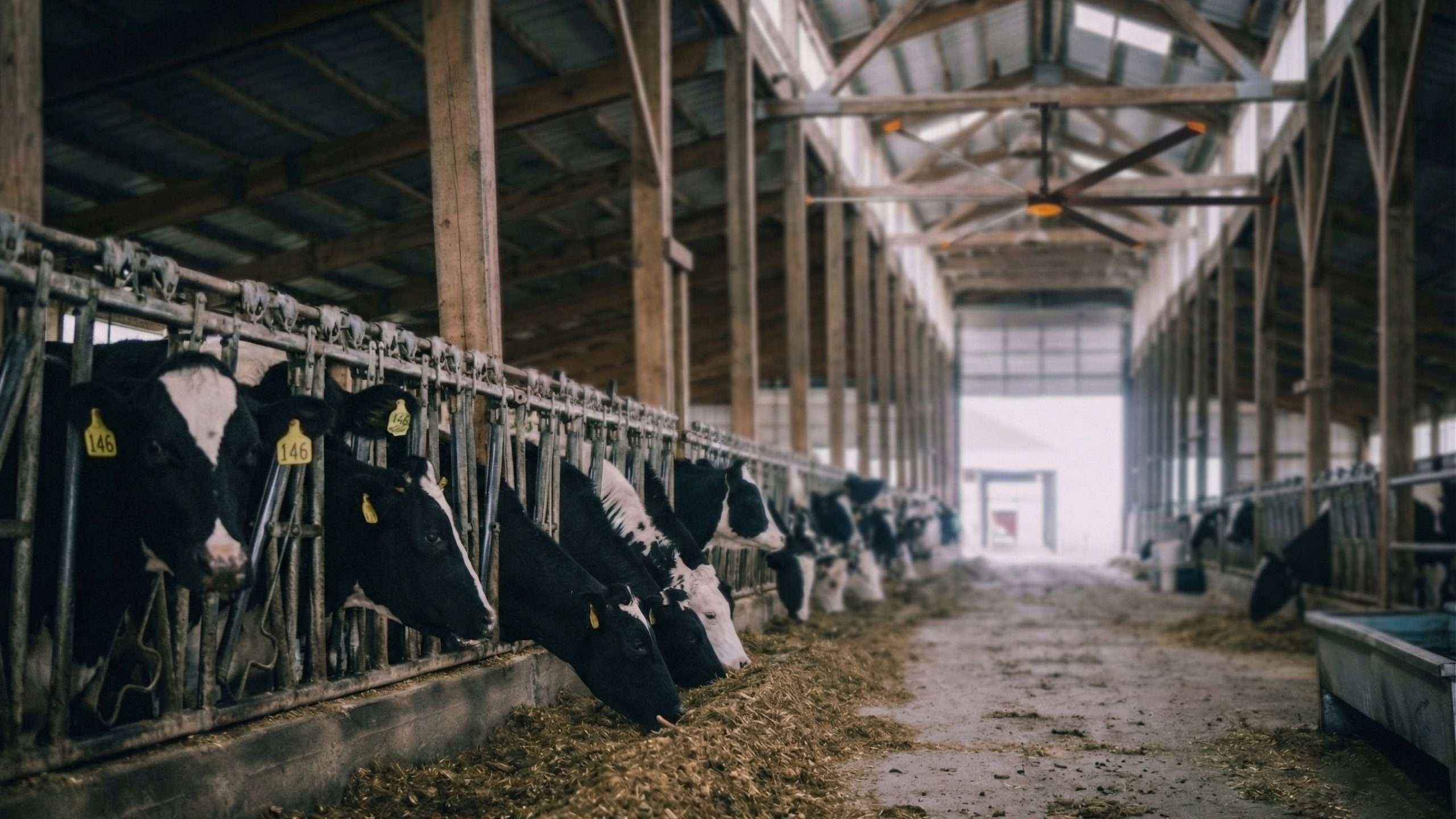
Control Ammonia.
Protect the Flock.
HVLS fans continuously circulate the full air volume inside poultry houses — diluting ammonia generated by litter, reducing moisture that enables pathogen growth, and maintaining the uniform litter dryness critical to flock respiratory health and footpad condition scores.
Consistent airflow across the house cross-section eliminates the stratified air layers where ammonia concentrates at bird height. Operators report a 25–30% reduction in ammonia levels at floor level — directly reducing medication costs and improving flock uniformity at processing weight.

Cut Power Bills.
Protect Your Margin.
A Marckeez Agricultural HVLS fan draws as little as 0.75 kW while moving the same air volume as dozens of conventional spot fans. Deployed alongside existing ventilation, HVLS fans significantly reduce tunnel fan runtime — cutting electricity consumption while maintaining or exceeding ventilation targets.
For a typical 1,000 m² broiler house or cattle barn, switching to HVLS fans typically delivers 40–50% reduction in ventilation energy costs, with full payback commonly achieved within 12–18 months.
Engineered to
Perform in the Field.
Mortality dropped in the first summer cycle after installation. The birds are more evenly distributed across the house and litter condition has improved measurably. The energy saving was a bonus we hadn't fully anticipated.
mortality per cycle
energy costs
achieved
processing weight
Designed for
Agricultural Environments.